
U-FACTOR
How readily heat moves through
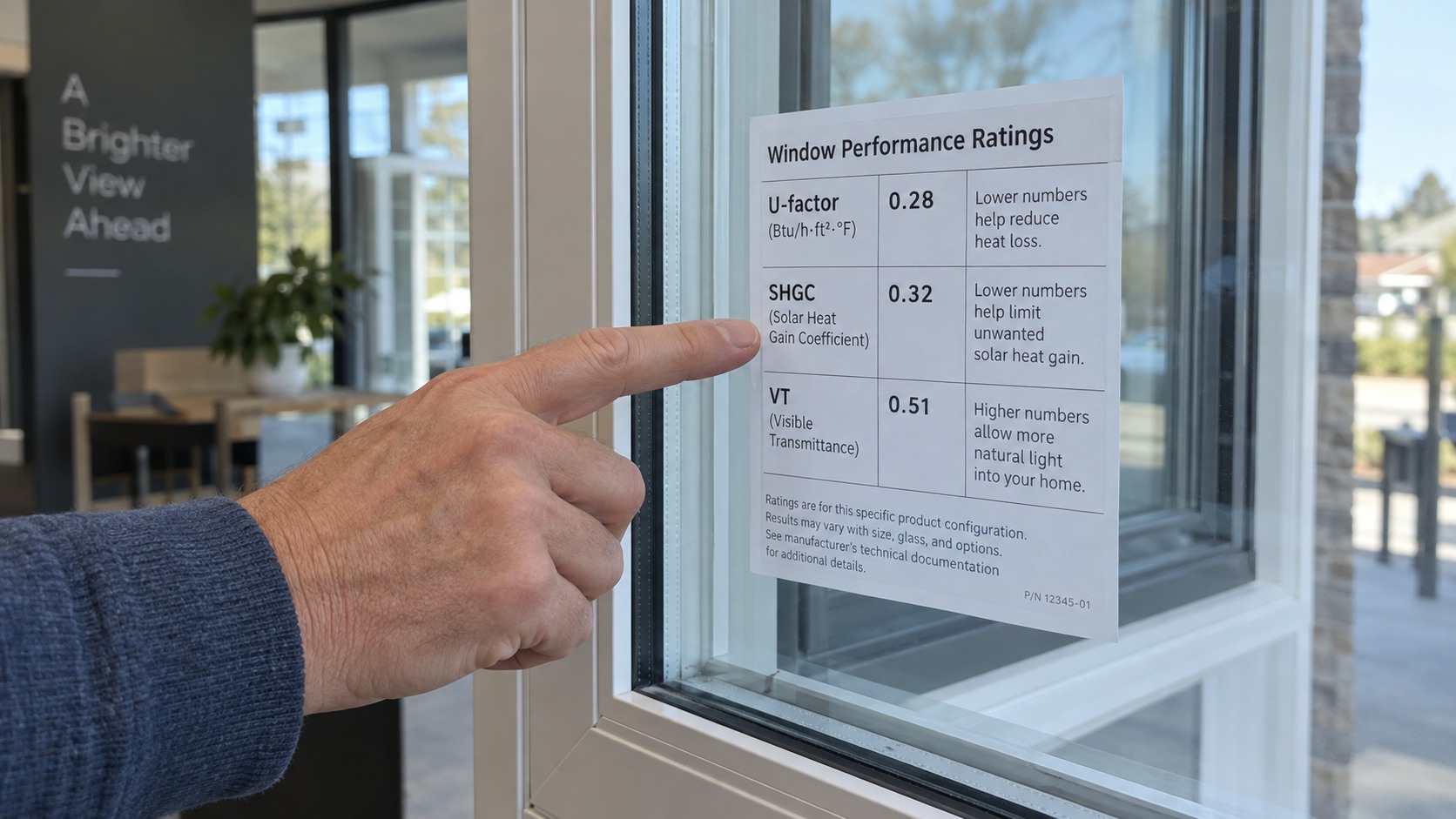
Lower means better insulating performance. This is especially important where winter heat loss and cold interior glass are major concerns.
WINDOWS DIRECT UNIVERSITY
U-factor, solar heat gain, visible light, air leakage and condensation resistance describe different parts of performance. The best choice is not the window with every number pushed in the same direction—it is the certified product that fits the climate, room and goal.
NFRC ratings make product comparisons more consistent by using standardized certification and testing methods.
Lower means better insulating performance. This is especially important where winter heat loss and cold interior glass are major concerns.
Lower blocks more solar heat; higher admits more. The right balance depends on climate, orientation, shading and heating or cooling priorities.
Higher generally means more daylight. Compare it alongside solar-control goals rather than treating maximum light as automatically best.
Lower means less measured air leakage through the product under test conditions. Installation gaps around the frame are a separate field issue.
A higher condensation-resistance value indicates a product is better able to resist interior surface condensation under the rating method. Indoor humidity, outdoor temperature, airflow and installation still influence what happens in a real home.
Use the rating to compare products while keeping expectations tied to the home’s climate and moisture conditions.
The NFRC label provides independently certified performance ratings for a particular product configuration. ENERGY STAR uses certified values to determine whether a product meets its current requirements for a designated climate zone.
Use the current ENERGY STAR climate-zone finder rather than relying on a national advertisement or an outdated map.
Verify that the product and configuration being ordered carry the certification claimed for your zone.
Keep labels, certified product information and the written window schedule with warranty and project records.
Strong solar control may reduce unwanted summer heat but can also reduce useful winter gain or daylight, depending on the glass. A very efficient fixed unit may have different ventilation and emergency-use implications than an operable window.
Manufacturer, series, frame material, operating style, glass package and certified product number.
U-factor, SHGC, VT, air leakage and condensation resistance—without mixing glass-only and whole-window values.
Orientation, shading, comfort, moisture, daylight, operation and local code should shape the decision.
A lower U-factor indicates better insulation, but the complete choice still includes solar heat gain, light, air leakage, climate, cost and the window’s purpose.
It depends on climate, orientation, shading and whether solar heat is helpful or unwanted. Use current climate guidance and room-specific goals.
No. The NFRC label reports certified performance values; ENERGY STAR identifies products meeting program criteria for applicable climate zones.
Yes. Size, operating style, frame, glass package and options can change performance. Verify the exact quoted configuration.
Program criteria can change. Confirm current certification and climate-zone qualification when the product is ordered.
A clear window schedule makes performance claims visible, comparable and easier to verify.