
GLASS
Work from clean to dirty
Rinse loose grit before wiping. Use clean tools so trapped particles do not drag across the surface.
WINDOWS DIRECT UNIVERSITY
You do not need a complicated maintenance routine. A few careful checks help protect operation, drainage, appearance, indoor comfort, and the records behind your warranty.
THE FOUR-PART CARE ROUTINE
Glass, frames, tracks, and screens.
Drainage openings and moving tracks.
Locks, rollers, balances, and seals.
Photos, dates, labels, and symptoms.
CLEAN WITHOUT CREATING DAMAGE
Follow the manufacturer’s instructions for the exact frame, glass, finish, hardware, and screen. A soft cloth, mild soap, clean water, and gentle handling are safer starting points than abrasive pads, harsh chemicals, blades, or high-pressure washing.
GLASS
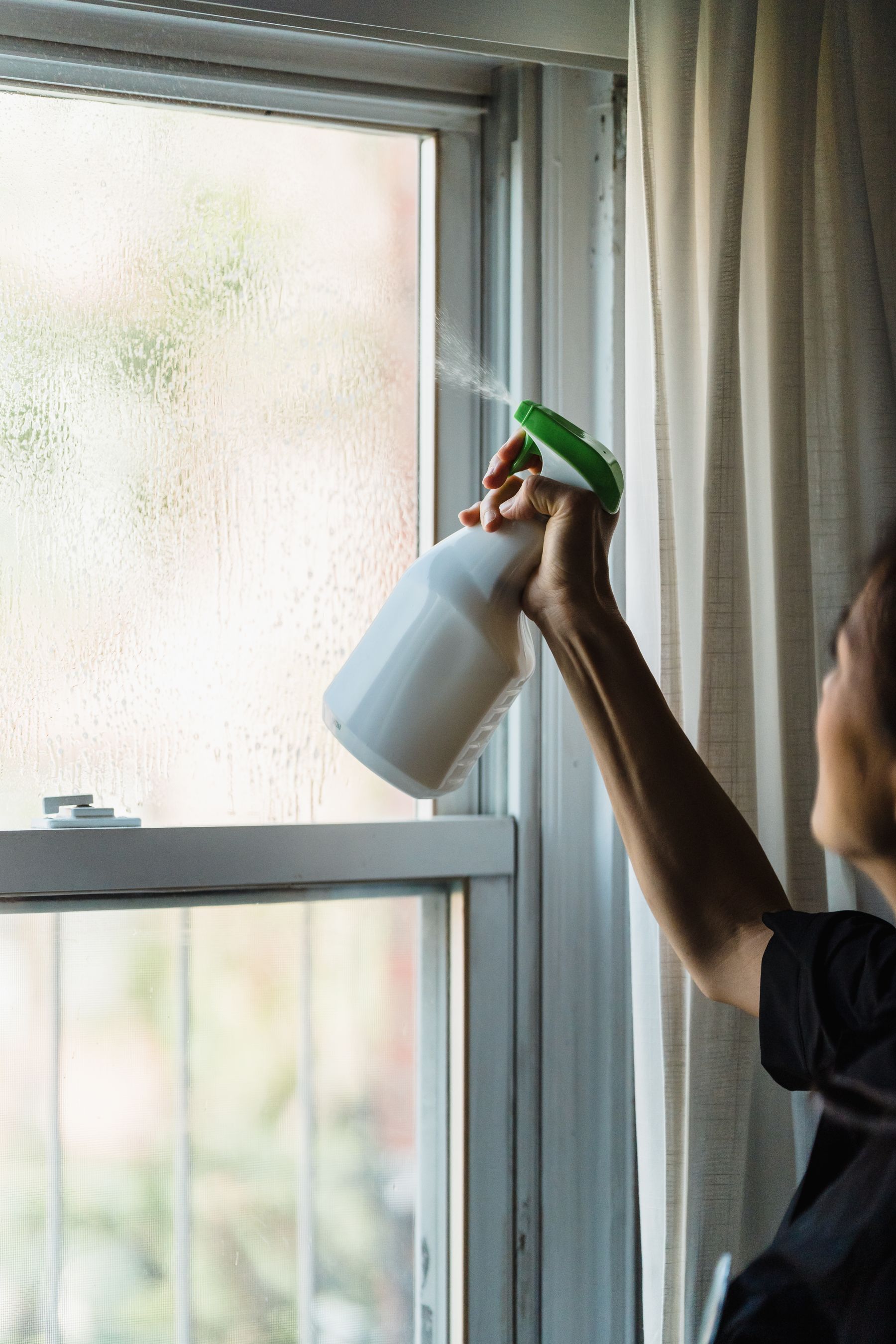
Rinse loose grit before wiping. Use clean tools so trapped particles do not drag across the surface.
FRAMES & TRACKS
Vacuum or lift dirt from tracks before washing. Do not cover intentional drainage openings with caulk or debris.
SCREENS & HARDWARE
Handle screens evenly and use only manufacturer-approved lubrication or adjustment methods.
CONDENSATION IS A CLUE
Moisture on the room-side glass can reflect indoor humidity, outdoor temperature, glass temperature, airflow, or window coverings. Moisture trapped between sealed panes is a different symptom and can indicate a failed insulated-glass seal. Water at the sill or wall can require prompt investigation of drainage, sealants, installation, roofing, siding, or other building paths.
SEASONAL CHECKLIST
Operate each sash or panel. Note new resistance, scraping, drifting, or uneven movement.
Confirm locks engage without forcing. A sudden alignment change deserves attention.
Look for gaps, cracking, pulling, or damage in accessible weatherstripping and exterior sealants.
Remove loose debris from visible tracks and designed drainage paths without altering the product.
Notice paint changes, swelling, staining, softness, or recurring moisture on nearby finishes.
An occasional dated photo creates a simple history if service is needed later.
KNOW WHEN TO PAUSE
Stop and request qualified help when glass is cracked, a sash feels unstable, hardware is separating, water is entering, the surrounding wall is changing, or an adjustment would require disassembly. Forcing the product can worsen damage or complicate a warranty review.
1. Make the area safe and limit further water exposure.
2. Photograph the full opening and close details.
3. Find the product label, order number, and installer.
4. Follow the manufacturer or dealer service process.
PRODUCT-SPECIFIC GUIDANCE
AMSCO provides customer-facing care and maintenance information for its window products. Those instructions—not a generic internet shortcut—should guide cleaning materials, handling, and maintenance. If a condition may involve warranty service, preserve the evidence and contact the servicing dealer as directed.
FREQUENTLY ASKED QUESTIONS
Only when the product instructions recommend it, and only with the approved material and location. The wrong product can attract debris or affect finishes.
Not by itself. Indoor humidity, temperature, airflow, coverings, and glass performance all influence surface condensation.
Persistent moisture or haze inside a sealed insulated-glass unit can be consistent with seal failure and should be documented for service review.
Do not assume so. High-pressure water can drive moisture into unintended locations or conflict with manufacturer care instructions.
Maintenance observations help reveal how the assembly is aging and create better documentation if service or warranty support becomes necessary.
SEE SOMETHING UNUSUAL?