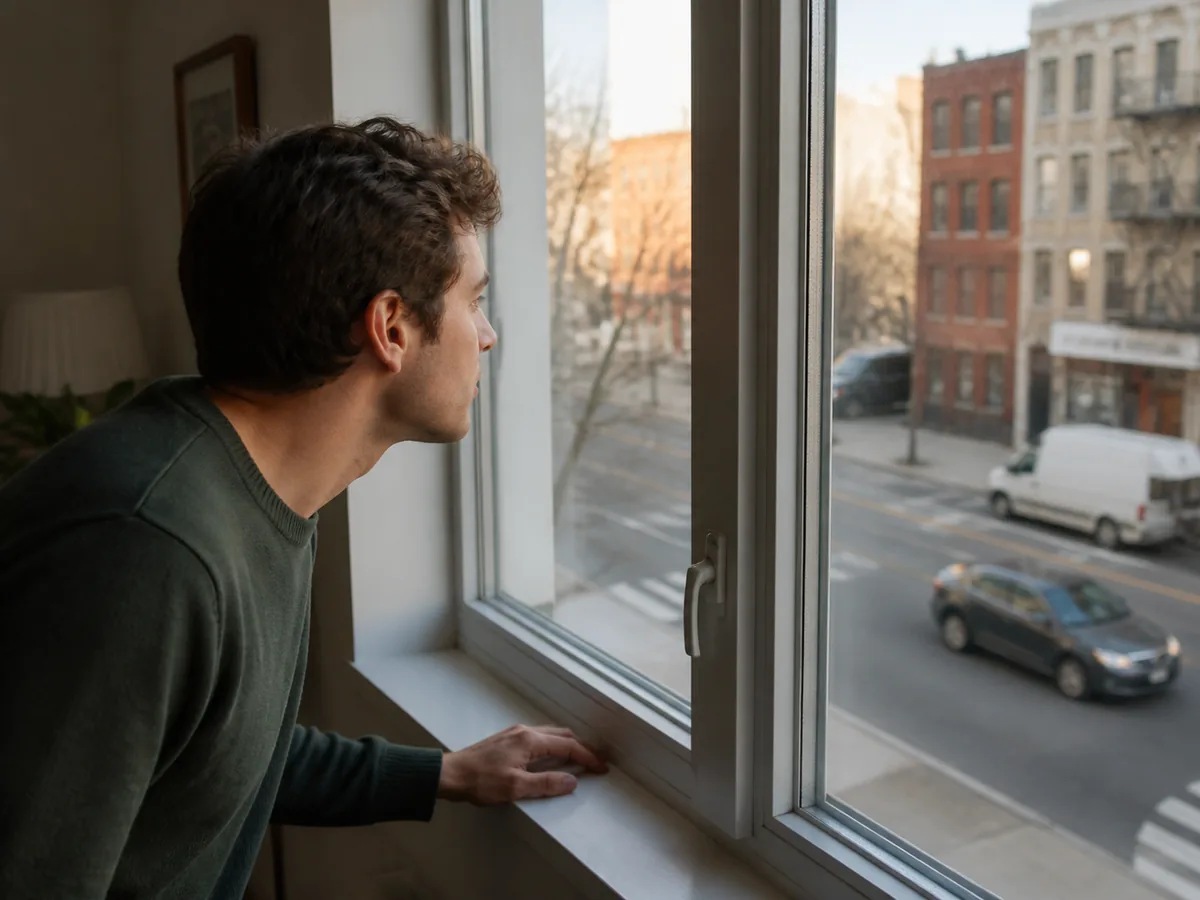
WINDOW PROBLEMS, EXPLAINED

What is your window trying to tell you?

Fog, drafts, water, noise, heat, and difficult operation are symptoms—not automatic proof that every window needs replacement. Start with what you can see, feel, or hear.

BEGIN WITH THE PATTERN

The timing matters almost as much as the symptom.

Notice whether the problem appears during wind, rain, freezing weather, direct sun, or only in one room. Compare the problem window with another window on the same side of the home. A simple pattern often separates a glass issue from an air-sealing, drainage, hardware, or installation issue.

Do not cover active water entry or visible decay and assume it is solved. Water can travel behind trim and finishes before the damage becomes obvious.

CHOOSE WHAT YOU NOTICE

Six common symptoms and the questions they raise.

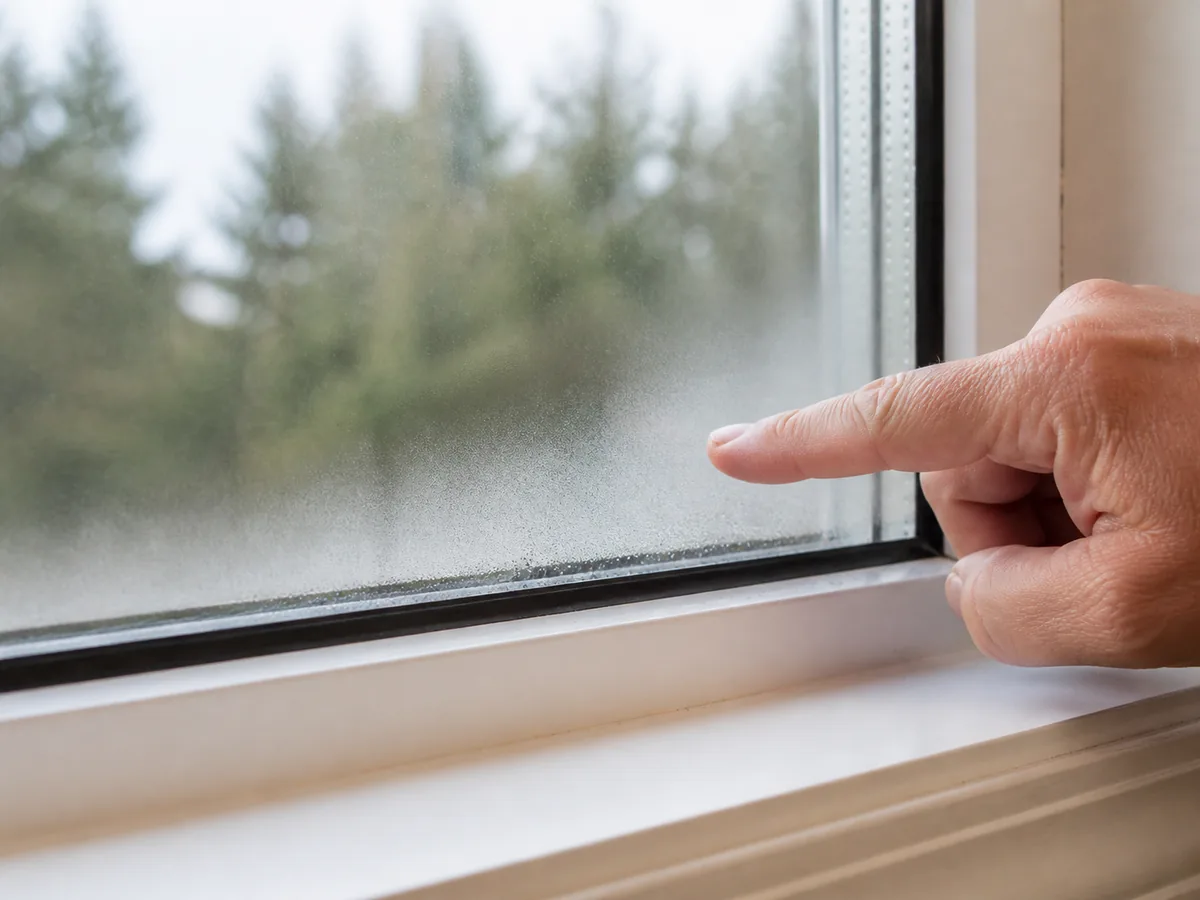
Close view of fog and moisture trapped between panes of insulated window glass
01

Fog between the panes

Moisture or haze sealed between glass panes usually indicates that the insulated-glass seal has failed.

LIKELY NEXT STEP

Confirm that the moisture is truly between the panes. Depending on the window, the glass unit or sash may be replaceable without replacing the complete frame.

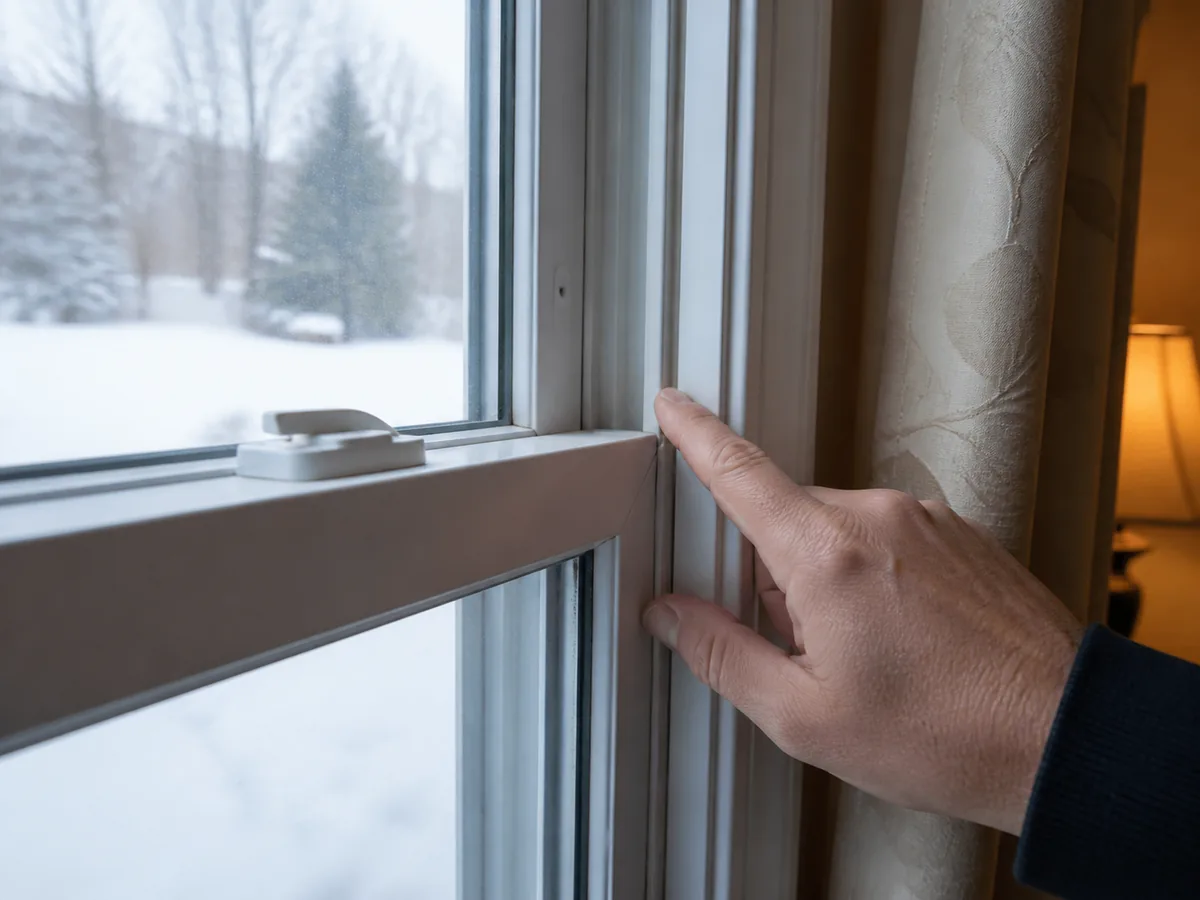
Homeowner feeling for an air draft along the edge of a closed window sash
02

A draft you can feel

Air may be passing through worn weatherstripping, an unlocked sash, an adjustment problem, or gaps around the installed frame.

LIKELY NEXT STEP

Lock the window, locate the air path, and compare it during calm and windy weather. The location determines whether adjustment, sealing, or replacement makes sense.

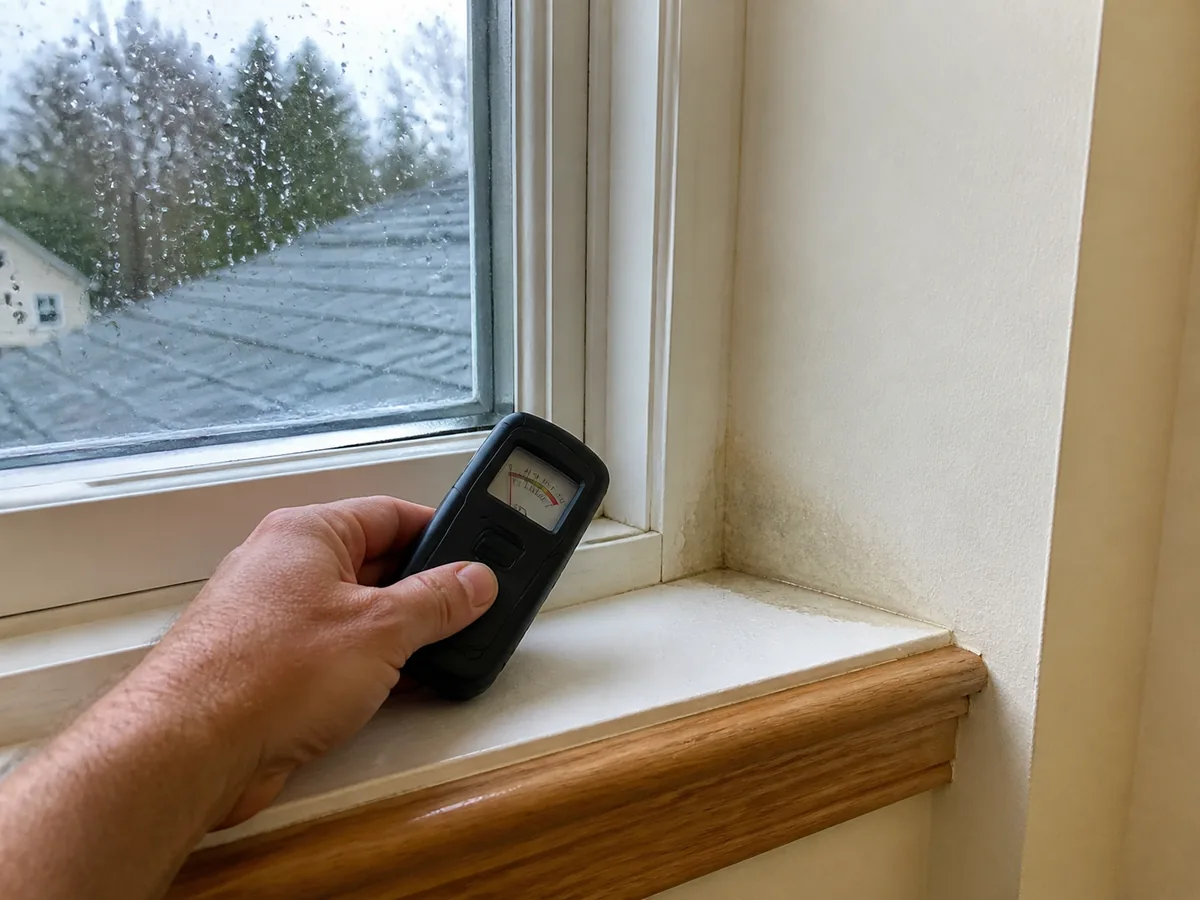
Water collecting at the lower corner of a residential window after rain
03

Water around the window

Water may enter at the window, above it, through cladding details, or from a wall-roof intersection. The wet spot is not always the entry point.

LIKELY NEXT STEP

Document the rain direction and location, protect the interior, and arrange qualified inspection. Repeated caulk-only fixes can conceal the real drainage problem.

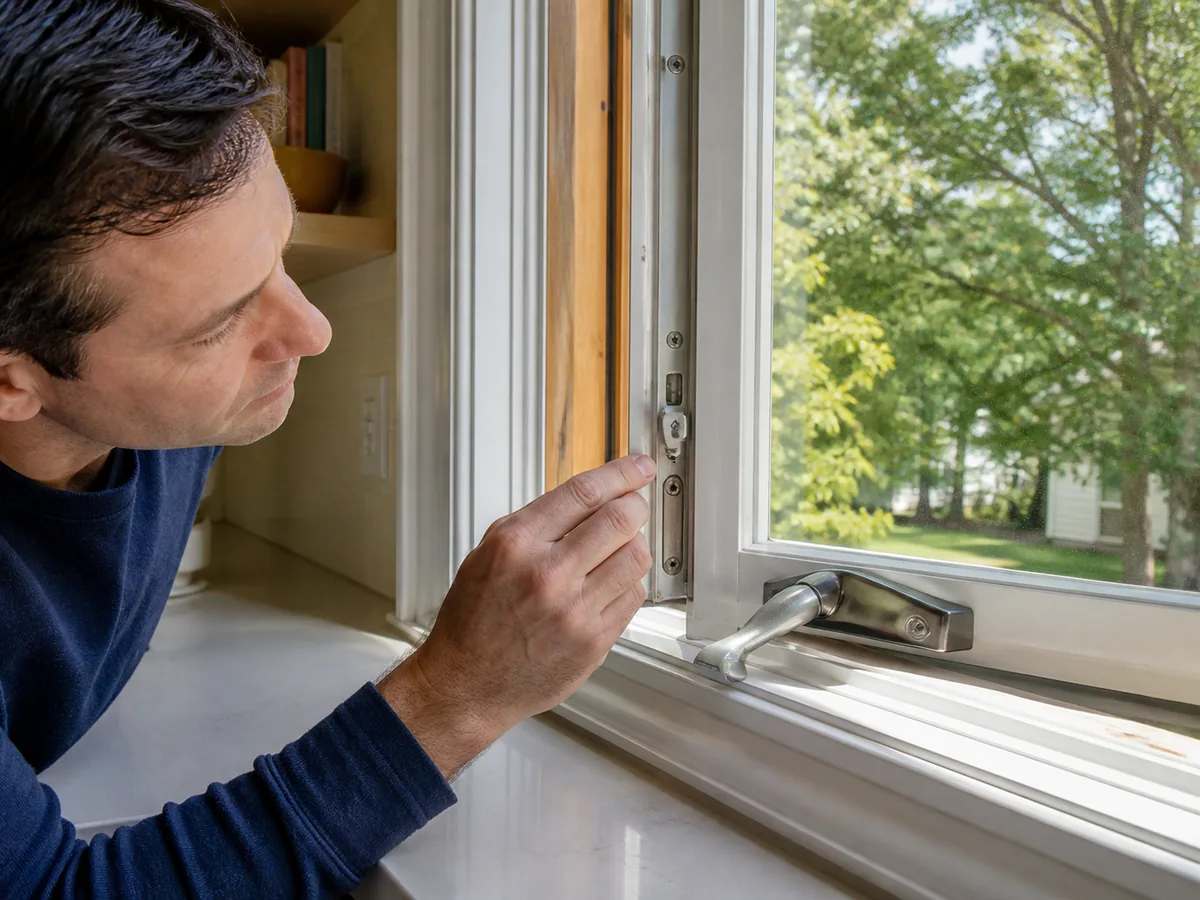
Homeowner testing a replacement window that is difficult to open smoothly
04

Hard to open or lock

Dirt, paint, worn hardware, sash balance failure, frame movement, swelling, or an out-of-square opening can interfere with operation.

LIKELY NEXT STEP

Do not force the sash. Check whether the issue is hardware-specific or whether the sash rubs consistently against the frame.

Homeowner noticing traffic noise through a closed window
05

Outside noise feels excessive

Air leakage, glass thickness, pane spacing, laminated glass, frame design, and the surrounding wall all affect perceived sound.

LIKELY NEXT STEP

Identify the sound source and frequency. A better-sealed window may help, but no window can make an ordinary wall completely soundproof.

Hand comparing the temperature of sun-facing window glass in a bright room
06

Hot, cold, or room-side condensation

Glass temperature, indoor humidity, airflow, shade, orientation, and outdoor conditions all influence comfort and surface condensation.

LIKELY NEXT STEP

Track indoor humidity and weather conditions. Room-side condensation is different from fog trapped between sealed panes.


REPAIR OR REPLACE?

Replace the failed part when the rest of the system is sound.

A failed lock, screen, balance, weatherstrip, or insulated-glass unit does not always justify a full replacement. Repair becomes less attractive when failures repeat, compatible parts are unavailable, frames are deteriorated, operation remains poor, or the installation itself is contributing to air or water problems.

Repair may fitOne isolated component has failed; the frame is sound; parts are available; and the installation is performing properly.
Replacement may fitSeveral parts are failing; the frame is damaged; operation or comfort remains poor; or correction requires rebuilding the installed opening.
Inspection comes firstActive water, structural movement, concealed damage, code concerns, and installation disputes deserve qualified on-site review.

A BETTER DIAGNOSTIC CONVERSATION

Bring observations, not conclusions.

1

Show the location

Photograph the entire opening, the symptom close up, and the surrounding wall or exterior details.

2

Describe the conditions

Note temperature, wind, rain direction, sun exposure, humidity, and whether the window is open, closed, or locked.

3

Explain the history

Include when it began, whether it is worsening, previous repairs, and whether nearby windows behave the same way.

!

WHEN NOT TO WAIT

Treat safety and active water as inspection issues—not internet-answer issues.

Secure broken glass and openings that will not lock. Address active leakage, visible mold-like growth, soft or decayed framing, falling components, and windows needed for emergency escape promptly. If electrical wiring, structural movement, or extensive concealed damage may be involved, use appropriately qualified help.

FREQUENT QUESTIONS

Direct answers before the appointment.

Does condensation mean my windows are bad?

Not necessarily. Moisture between sealed panes commonly points to insulated-glass seal failure. Moisture on the room-side surface is influenced by glass temperature and indoor humidity. Exterior surface moisture can occur when efficient glass stays cooler than humid outdoor air.

Can a draft be fixed without replacing the window?

Sometimes. Lock adjustment, weatherstripping, hardware, or accessible perimeter sealing may solve a localized air path. If leakage comes from frame distortion, deterioration, or the installed opening, a larger correction may be needed.

Why does water appear below the window?

The visible location may be downstream from the entry point. Water can travel through trim cavities and wall assemblies. Rain direction, exterior details, and controlled testing help distinguish window leakage from surrounding construction.

Will replacement windows eliminate outside noise?

They may reduce noise when air leakage or weak glass performance is part of the problem, but results depend on sound frequency, glass construction, frame, installation, wall, roof, doors, and other paths.

How this guide was built

Grounded in real measuring, installation, troubleshooting, and homeowner-service experience from Windows Direct Utah. General education only; local conditions and individual homes vary.

Reviewed August 23, 2026

Read our Editorial Standards

Describe what you see, feel, or hear.

You do not need the technical name. Share the pattern and we will help you find the most useful next question.