
WINDOWS DIRECT UNIVERSITY
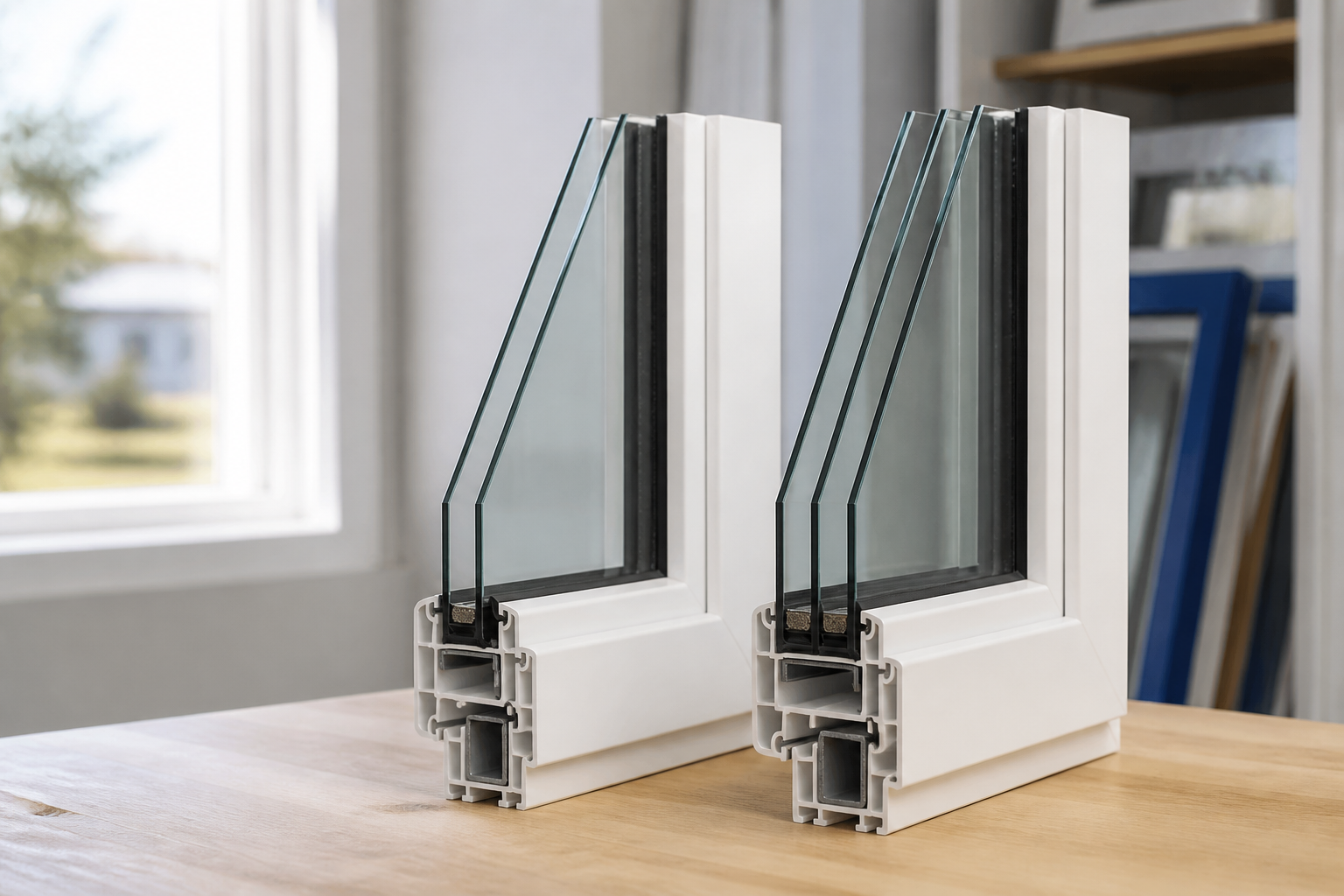
Double pane or triple pane? Compare the whole window.
A third pane can improve insulation, but pane count alone does not decide comfort, value or certified performance. Coatings, gas fill, spacers, frame, operating style, size, installation and climate all matter.
Explore this chapter
More context before you begin
The label answers more than the pane count.
Double-pane insulated glass uses two panes separated by a sealed space. Triple-pane uses three panes and two sealed spaces. The added layer can lower U-factor and change sound, weight, daylight and cost—but a high-performing double-pane unit can outperform a weak triple-pane configuration.
Compare certified whole-window U-factor, Solar Heat Gain Coefficient, Visible Transmittance, Air Leakage and, where available, Condensation Resistance for the exact size and configuration being quoted.
A third pane adds capability—and tradeoffs.
Heat flow
Triple-pane configurations often achieve a lower U-factor, which can help in cold climates, exposed rooms and comfort-sensitive spaces. Verify the exact label value.
Solar control
Pane count does not select the right SHGC. Low-E coating design and orientation determine how much solar heat the glass admits or rejects.
Daylight and appearance
Additional glass and coatings may reduce visible light or slightly change reflectance and color. Compare actual samples for important views and finishes.
Weight and operation
Triple-pane sashes are heavier. Frame engineering, balances, hinges, hardware, size limits and installation must support the complete configuration.
More glass is not a substitute for the right glass.
A well-selected double-pane package can be the stronger value when its coatings, spacer, frame, air leakage and installation fit the room. Triple pane earns its place when the measurable improvement supports a real comfort or climate goal.
Ask for these exact details
- Manufacturer, series, operating style and quoted size
- NFRC U-factor, SHGC, VT and Air Leakage
- Number and location of Low-E coating surfaces
- Gas fill, spacer system, glass thickness and safety glass
- Frame reinforcement, hardware and size limitations
- Installation method and interior/exterior finishing scope
Choose by climate, exposure and room.
High-performance double pane
Often provides a strong balance of certified performance, daylight, weight and cost. It may be especially sensible where cooling, solar control or moderate winter conditions dominate.
Triple pane
Can be valuable in colder climates, high elevations, bedrooms, large glass areas or rooms with persistent winter comfort concerns—when the exact ratings show a meaningful gain.
Room-by-room specification
One home can reasonably use different glass packages by elevation or room. West-facing heat, mountain exposure, shade, views and HVAC balance are not identical.
Put verified values beside the added cost.
Is triple pane always more energy efficient?
Not automatically. It often lowers U-factor, but configurations overlap. Compare the NFRC label for each exact product rather than assuming every triple-pane window beats every double-pane window.
Does triple pane eliminate condensation?
No. A warmer interior glass surface may reduce the likelihood of room-side condensation under the same conditions, but indoor humidity, outdoor temperature, air movement and installation still matter.
Is triple pane always quieter?
Not necessarily. Acoustic results depend on glass thickness, asymmetry, laminated layers, spacing, seals, frame, installation and sound frequency. Ask for whole-product STC or OITC data when noise is a primary goal.
Will triple pane look darker?
It may transmit somewhat less visible light depending on coatings and glass. Compare the Visible Transmittance rating and view physical samples under real daylight.
Turn the glass choice into a complete specification.
Use certified ratings and the room’s real conditions to compare proposals on equal terms.
Sources and review: U.S. Department of Energy Energy Saver guidance on insulated glazing, Low-E coatings, gas fills and spacers; ENERGY STAR residential window criteria; NFRC certified whole-window ratings. Reviewed August 24, 2026.
Choose measurable performance, not the biggest pane count.
Bring the product series, size, glass code and NFRC values. The University will help organize the comparison in plain language.