
1. Solar heat control
A lower SHGC admits less solar heat and is often valuable in cooling-dominated climates—especially on exposed glass.
WINDOWS DIRECT UNIVERSITY
For sunny and cooling-dominated regions, glass selection, orientation, exterior shade, airtight installation, and daylight must work as one system.
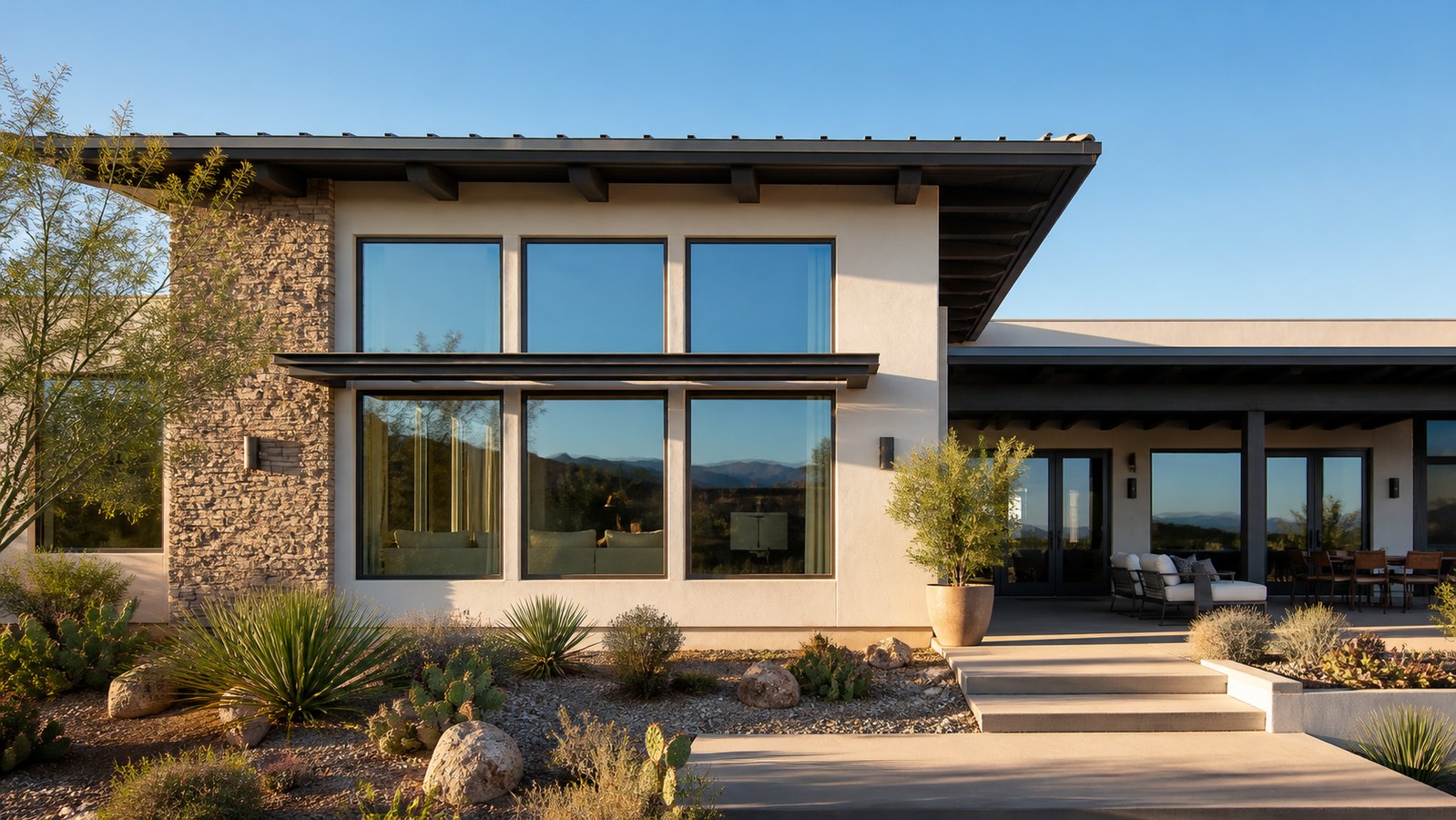
Prioritize an appropriate whole-window solar heat gain coefficient on exposed glass, low air leakage, a low-e coating matched to the climate, useful daylight, and exterior shading where afternoon sun is severe. Then make sure the installation preserves that performance.
A lower SHGC admits less solar heat and is often valuable in cooling-dominated climates—especially on exposed glass.
West-facing afternoon sun, shaded north glass, and south glass beneath an overhang do not present the same problem.
Visible transmittance helps explain how much daylight passes through. Heat control should not automatically mean a dim room.
Overhangs, awnings, screens, and landscape shade can stop solar energy before it reaches the glass.
Low air leakage and a carefully sealed opening matter when conditioned indoor air is separated from persistent outdoor heat.
Solar heat gain coefficient runs from zero to one. It describes the fraction of solar energy admitted through the complete window. In cooling-dominated locations, lower SHGC values are often preferred—but exposure, shading, daylight, heating season, and the room's use still matter.
The U.S. Department of Energy notes that spectrally selective coatings can reduce summer heat gain without greatly changing visible light or color.
Tint can reduce solar gain, but it also reduces visible light and may change exterior appearance. Compare samples in daylight before committing.
The useful question is not “Which glass sounds most advanced?” It is “Which verified glass package fits this room's sun, view, comfort target, and climate?”
Understand glass and energy efficiencyFixed overhangs can be designed around seasonal sun angles, especially on south-facing elevations.
Purpose-made exterior screens can reduce direct exposure before sunlight passes through the glass.
Adjustable exterior devices can respond to changing weather, glare, privacy, and seasonal needs.
Appropriately placed trees and structures can help, but future growth, wind, fire, moisture, and maintenance must be considered.
Many Utah homes experience cold winter nights, intense high-elevation sun, hot summers, large temperature swings, and very different exposures around the same house. The correct decision balances U-factor, SHGC, visible light, altitude-appropriate manufacturing, frame performance, and installation—not a single climate slogan.
Cooling-dominated climates often benefit from lower whole-window SHGC values. The appropriate target still depends on local criteria, orientation, shading, glass area, daylight, and any meaningful heating season.
No. Tint can reduce solar gain but also reduces visible light. Spectrally selective low-e coatings may control heat with less effect on daylight and color.
Not automatically. Pane count affects insulation, but solar heat control, coating choice, air leakage, frame design, shading, storm requirements, and installation may be more decisive.
Low afternoon sun can strike the glass directly when outdoor temperatures are already high. Orientation-specific glass or exterior shade may be appropriate.
Understand SHGC, U-factor, visible light, air leakage, and certification.
Learn how coatings, panes, gas fill, spacers, and climate interact.
See how the decision changes where heating, surface warmth, and condensation dominate.
Windows Direct University turns field experience from Windows Direct Utah into plain-language education for homeowners throughout the United States and Canada.
Sources: U.S. Department of Energy, ENERGY STAR, and Natural Resources Canada. Product and installation requirements vary by location and home.